
Across the Cincinnati region, higher education institutions are working to prepare students for entry into meaningful careers. At the same time, regional employers seek to expand and attract new talent among evolving workforce demands.
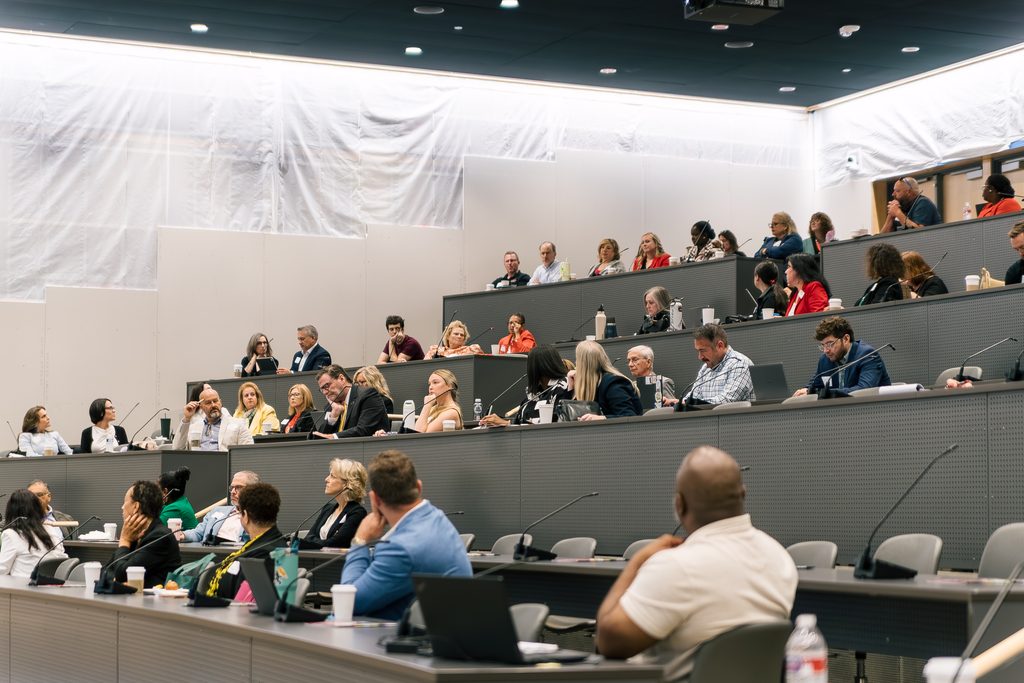
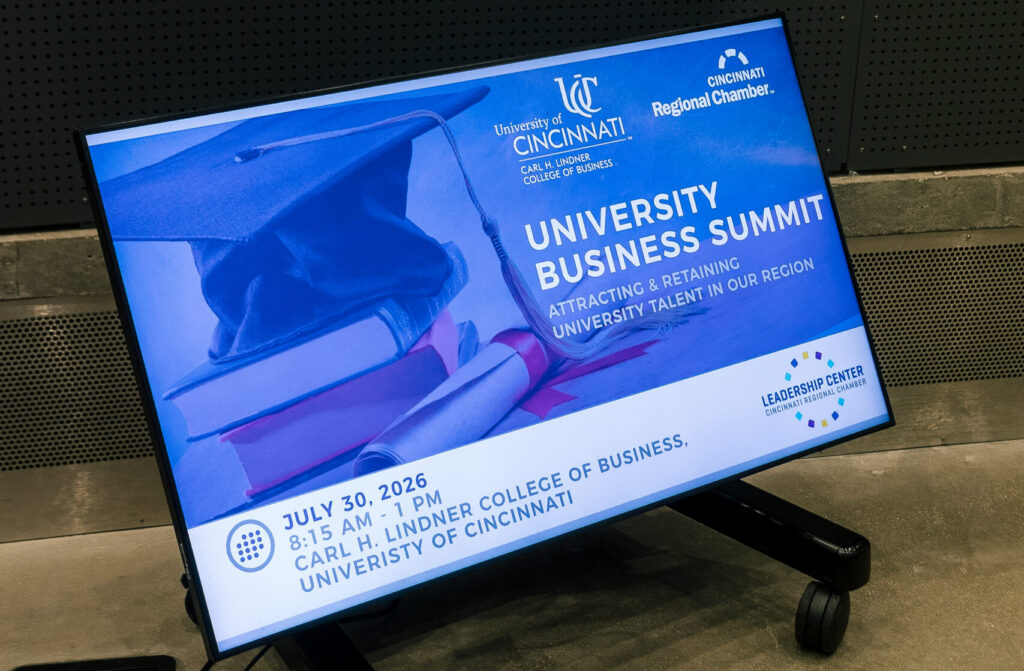
Those challenges took center stage at the 2026 University Business Summit. Leaders from colleges and universities across the region joined local employers and workforce partners to explore how institutions can strengthen connections with industry, expand work-based learning opportunities, and create clearer pathways from education to employment.
Relationship Building Across Systems
Many colleges and universities across the Cincinnati region already have strong relationships with employers. The Summit highlighted several models that show what those partnerships can accomplish when institutions and businesses work together around shared goals.
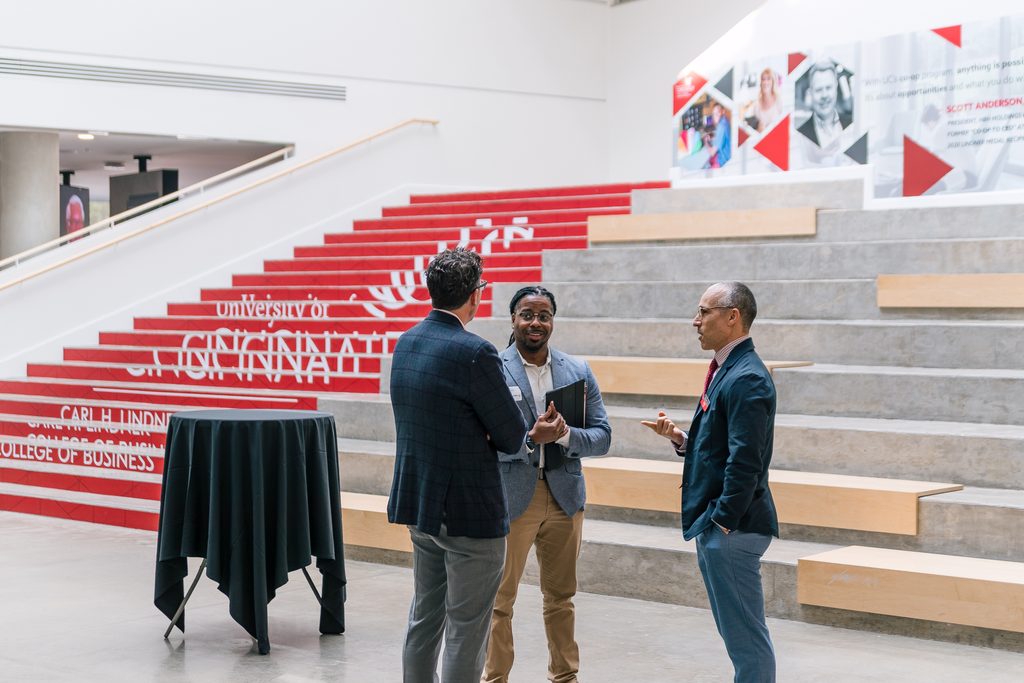
At the University of Cincinnati’s Carl H. Lindner College of Business, the Universal Co Op program requires undergraduate students to complete two full-time equivalent co-ops before graduation, facilitating hands-on skill development for every student. Lindner has also invested in employer relations through dedicated staff roles and new approaches such as stackable co-ops, course projects, case competitions, and gig work to expand opportunities for students and increase exposure to the employers seeking to hire them.
Cincinnati State Technical and Community College offers another example. The college connects hundreds of employers with students through co-ops and clinical experiences, creating direct pathways into the workforce. Its partnerships with organizations such as CVG and Kenwood Dealer Group have also helped expand existing programs, provide students with access to industry equipment and certifications, and strengthen talent pipelines for high-demand fields.
Northern Kentucky University is utilizing a “front door model”, leveraging their Norse Network Hub for industry partnerships using a concierge model to connect employers with the right academic programs, faculty expertise, and Career Services resources to create a clear pathway for growing student engagement in experiential learning and access to internship, co-op, and employment opportunities
These models operate with the common idea that employer engagement works best when institutions treat businesses as long-term partners in talent development rather than simply as sources of jobs after graduation.
Expanding Work-Based Learning Across Ohio: House Bill 96
Ohio’s new work-based learning requirements seek to build upon this work and utilize these models in institutions across the state.
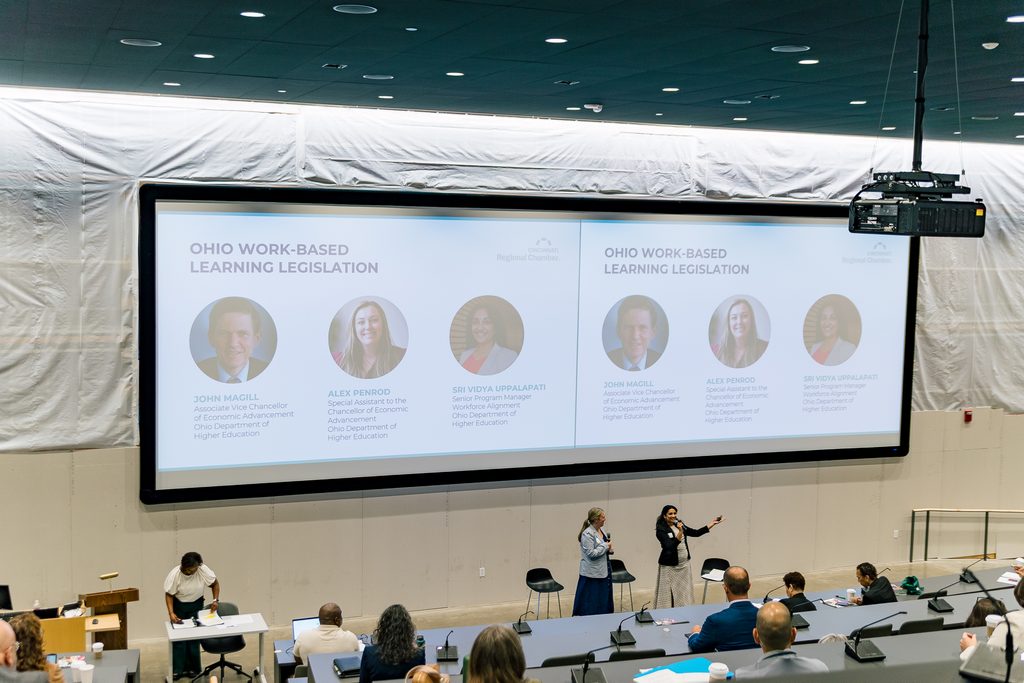
House Bill 96 calls on public two- and four-year institutions to expand co-op and internship programs that connect students’ coursework to their intended careers. The purpose of this legislation is to assist the Department of Higher Education in establishing a baseline of requirements and data collection that they can then utilize to further improve talent pipelines across the state. The 2026-27 academic year will serve as a pilot year, with implementation beginning in academic year 2027-28.
Representatives from the Ohio Department of Higher Education shared details about the legislation and its implementation at this year’s Summit. Under the new framework, eligible work-based learning opportunities must involve an employer, produce a defined product or outcome, connect to a student’s course of study and intended career path, receive institutional validation, develop professional and durable skills, and require at least 40 hours of participation.
Expanding work-based learning programs in this way helps students develop skills in a professional environment, understand what a career actually looks like, and build relationships with potential employers. For businesses, these experiences provide an opportunity to introduce students to their industry, evaluate emerging talent, and shape skills before graduates enter the workforce.
This approach creates a two-way exchange where students gain experience and clearer career pathways and employers gain a stronger connection to the future workforce.
Employer Engagement Beyond Hiring
The Summit also highlighted that employers can engage with higher education beyond simply hiring interns and co-op students. Industry partners can play an early role in shaping future talent pipelines by contributing to curriculum development, sponsoring equipment or scholarships, providing mentorship, supporting earn-and-learn programs, and serving on advisory boards.
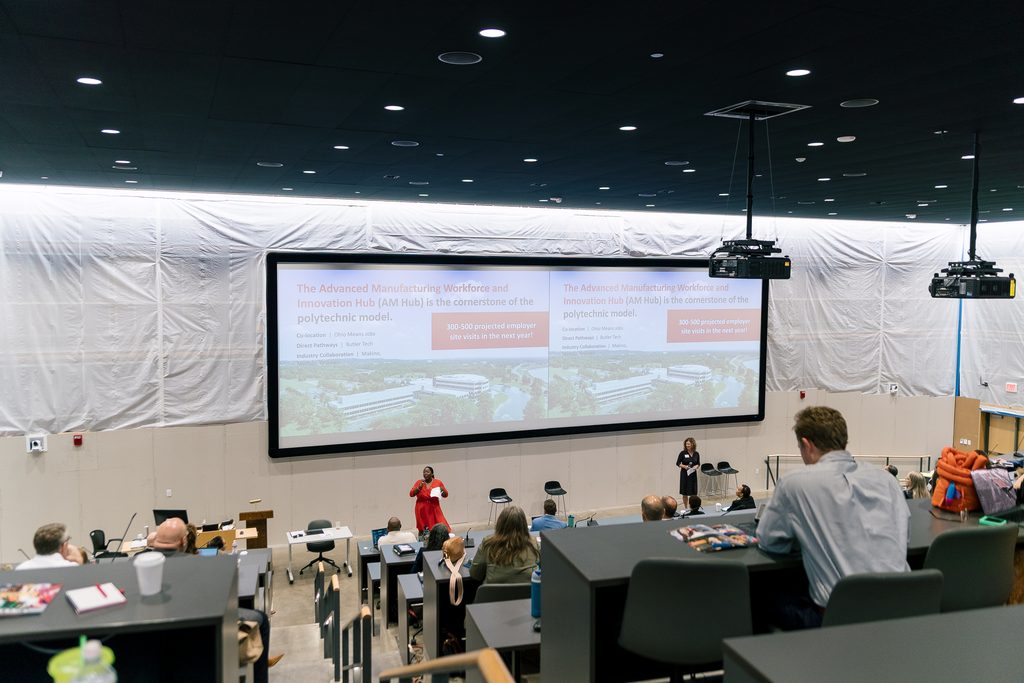
Miami University’s Advanced Manufacturing Workforce and Innovation Hub (AM Hub) is a strong case for this level of engagement. Through a colocation model, the AM Hub brings together education, workforce, and industry partners, including Ohio Means Jobs, Butler Tech, Makino, Modula, and Yaskawa. The model connects students with employer expertise and oversight while giving industry partners a direct role in developing the talent needed for advanced manufacturing.
Partnerships like the AM Hub demonstrate that work-based learning does not, and often should not, have to follow one formula. The right model depends on the needs of students, employers, institutions, and industries.
Cincinnati as a Work-Based Learning Leader
Ohio’s new work-based learning requirements create an important opportunity for relationships between regional higher education institutions and employers to shift from one-off recruiting toward multi-year partnerships with shared goals for talent development and workforce growth.
With a robust network of higher education institutions and a strong business community, the Cincinnati region is in a strong position to lead the state in work-based learning. Collaboration between industry and education is key to allow our region to make the most of that opportunity. Conversations like those at the University Business Summit continue to support regional businesses and higher education as they develop clearer, relationship-driven pathways between education and employment.
This opportunity stands to benefit the entire region. When employers help shape educational experiences, students graduate with stronger connections to local industries. When institutions engage industry partners in work-based learning development, employers gain access to a broader and better-prepared talent pool. Perhaps most importantly, when students can see a clear pathway from education to a meaningful career in the Cincinnati region, they have more reasons to build that career here.

By: Jackson Fort
Coordinator, Workforce Innovation Center at the Cincinnati Regional Chamber